

Fundamentals Analysis of Indian Stock Market
Fundamental analysis of the Indian stock market is a method used to evaluate the financial health and growth potential of a company before investing in its shares. Unlike technical analysis, which focuses on price charts and market trends, stock market fundamentals help investors understand the real value of a business. This approach is widely used by long-term investors who want to build wealth by investing in fundamentally strong companies. By studying factors such as revenue growth, profitability, debt levels, cash flow, and management quality, investors can make more informed decisions and reduce the risk of investing in weak businesses.
For beginners, understanding the fundamentals of Indian stock market is one of the most important steps towards becoming a successful investor. Fundamental analysis of stocks involves examining financial statements like the balance sheet, income statement, and cash flow statement. These reports provide valuable insights into how efficiently a company operates and whether it has the potential to deliver sustainable growth in the future. Investors also use important financial ratios such as PE Ratio, EPS, ROE, ROCE, and Debt-to-Equity Ratio to compare companies and determine whether a stock is fairly valued. Learning how to analysis stocks fundamentally can help investors identify quality businesses that have strong competitive advantages and long-term growth opportunities. Instead of relying on market rumors or short-term price movements, fundamental analysis focuses on the company's actual performance and future prospects. This approach is especially useful for investors who are looking for stable returns and wealth creation over many years.

Another important aspect of stock fundamental analysis is stock valuation. Investors use various stock valuation methods, including PE Ratio, Price-to-Book Ratio, and Discounted Cash Flow (DCF), to estimate the intrinsic value of a company. Buying stocks below their intrinsic value can increase the chances of generating better returns over time. This is why many experienced investors consider fundamental analysis to be the foundation of successful investing.
Whether you are a beginner or an experienced investor, understanding the basics of stock market for beginners and applying the principles of fundamental analysis of stocks can help you make smarter investment decisions. By focusing on business quality, financial strength, and future growth potential, investors can build a strong portfolio and achieve their long-term financial goals while minimizing unnecessary risks.
1. What are the Fundamentals of Indian Stock Market?
The fundamentals of Indian stock market refer to the process of evaluating a company based on its financial health, growth potential, profitability, and overall business performance. Unlike technical analysis, which focuses on charts and price movements, fundamental analysis helps investors understand the real value of a company. People who want to build wealth over the long term often use stock market fundamentals to select quality companies.

A good understanding of fundamental analysis of stocks can help investors avoid risky investments and make informed decisions. Investors usually study revenue growth, profit margins, debt levels, cash flow, and management quality before investing. Fundamental analysis is considered one of the most reliable methods for long-term investing because it focuses on the strength of the business rather than short-term market fluctuations. Whether you are a beginner or an experienced investor, learning how to analyse stocks fundamentally can improve your investment strategy and help you identify strong companies with sustainable growth.
Key Highlights :-
Important Concepts :-
2. Understanding Financial Statements and Ratios
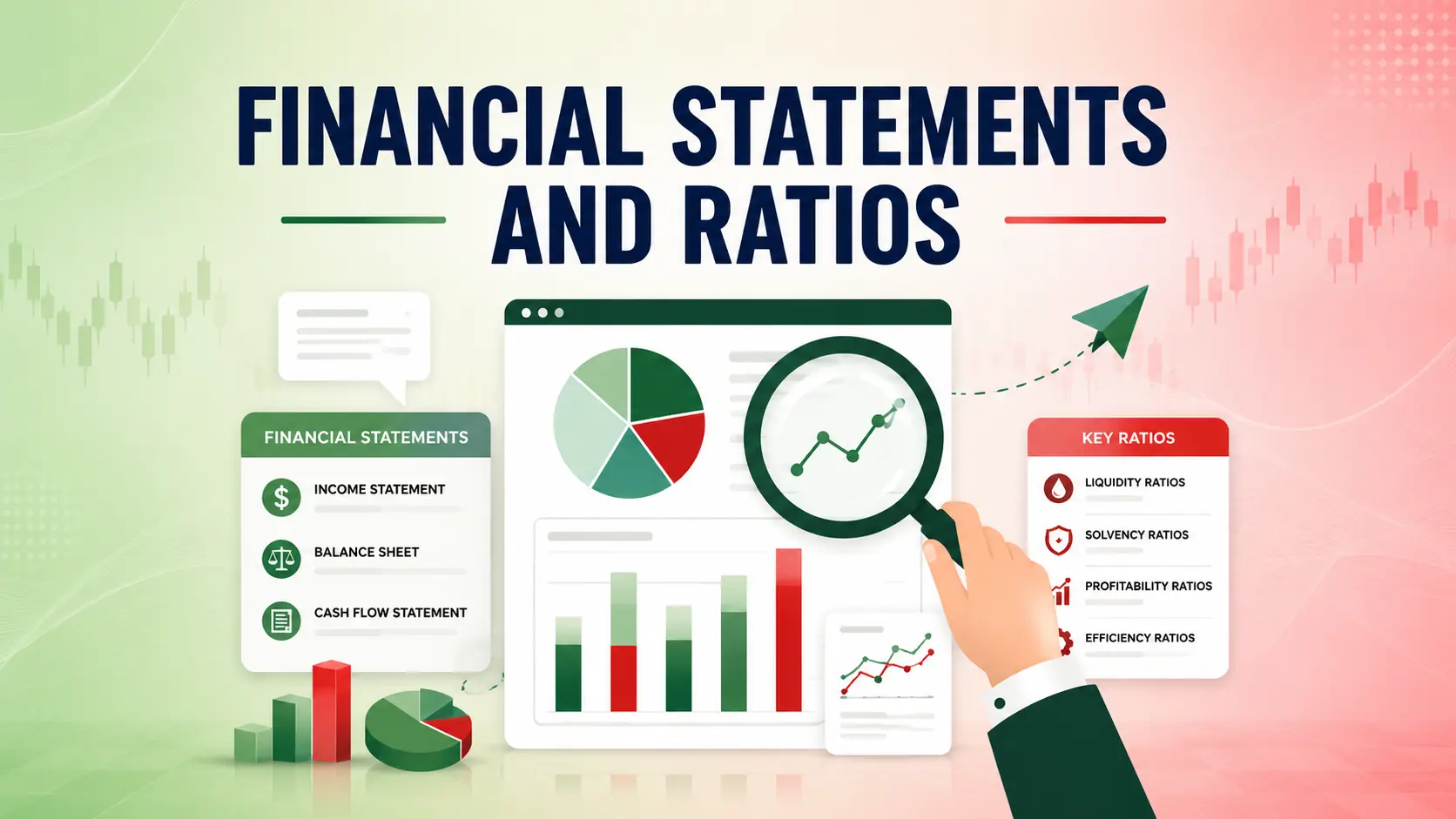
Financial statements are the foundation of stock market fundamentals. Investors use the balance sheet, profit and loss statement, and cash flow statement to understand a company's financial condition. These statements provide information about revenue, profits, assets, liabilities, and cash generation. Along with financial statements, financial ratios in stock market analysis help compare companies and measure performance. Ratios such as PE Ratio, EPS, ROE, ROCE, and Debt-to-Equity Ratio are commonly used by investors. A low debt level and consistent earnings growth generally indicate a healthy business. Understanding these metrics helps investors evaluate whether a stock is fairly valued or overpriced. Learning fundamental analysis of stocks becomes easier when investors know how to read financial statements and use ratios effectively.
Important Financial Ratios :-
Financial Reports :-
3. How to Analysis Stocks Fundamentally?
Knowing how to analyse stocks fundamentally is essential for successful investing. Investors should start by understanding the company's business model and industry position. Revenue growth and profit growth over several years indicate business stability. Management quality and promoter holding also play an important role because strong leadership often leads to better performance. Investors should also evaluate debt levels and cash flow generation before making decisions. Fundamental analysis of stocks helps investors avoid weak businesses and focus on companies with strong growth potential. By following a structured approach, investors can make more confident decisions and improve long-term returns.

Stock Analysis Checklist : -
Things to Check :-
4. Stock Valuation and Intrinsic Value.
Stock valuation methods help investors determine whether a stock is overvalued or undervalued. Intrinsic value represents the actual worth of a company based on its earnings, assets, and future growth. Investors use valuation techniques such as PE Ratio, PB Ratio, and Discounted Cash Flow (DCF) to estimate fair value. Buying quality stocks below their intrinsic value can provide better returns over time. Valuation is an important part of stock market fundamentals because even a great company may not be a good investment if it is overpriced. Understanding stock valuation methods helps investors make smarter decisions and reduce the risk of overpaying for stocks.

Valuation Methods :-
Key Benefits :-
5. How to Pick Stocks for Long-Term Investment?
Selecting quality stocks is one of the most important goals of fundamental analysis. Investors looking for long-term wealth creation should focus on companies with strong earnings growth, low debt, and a competitive advantage. Businesses with experienced management teams and consistent cash flow are more likely to deliver sustainable growth. Investors should avoid buying stocks based solely on news or market hype. Instead, they should focus on company fundamentals and long-term business prospects. Understanding how to pick stocks for long term can help investors build a strong portfolio and achieve financial goals over time.

Characteristics of Good Stocks :-
Long-Term Investing Tips :-
6. Fundamental Analysis vs Technical Analysis
Fundamental analysis and technical analysis are two different approaches used in the stock market. Fundamental analysis focuses on company performance, financial statements, and business growth, while technical analysis studies price charts and market trends. Long-term investors generally prefer fundamental analysis of stocks because it helps identify quality businesses. Traders, on the other hand, use technical indicators for short-term opportunities. Understanding both methods can help investors choose the strategy that best suits their goals.

Fundamental Analysis :-
Technical Analysis :-
7. Common Mistakes Beginners Make in Fundamental Analysis
Many beginners make mistakes while learning stock market fundamentals. They often invest based on social media tips or focus only on a single ratio such as PE Ratio. Ignoring debt levels, management quality, and cash flow can lead to poor investment decisions. Successful investors study the business carefully and avoid emotional investing. Patience and proper research are essential for long-term success in the stock market.