

FPO
A Follow-on Public Offering (FPO) is a process in which a company that is already listed on the stock exchange issues additional shares to investors. In simple words, an FPO is the second or later public share offering made by a company after it has already completed its IPO (Initial Public Offering).While an IPO helps a private company enter the stock market for the first time, an FPO allows an already listed company to raise more funds from the public for business expansion, debt repayment, acquisitions, or other corporate purposes.

For example, imagine a company that successfully launched its IPO a few years ago and is now listed on the stock market. As the business grows, it may require additional capital to open new branches, invest in technology, expand production capacity, or reduce existing debt. Instead of taking large loans from banks, the company can launch an FPO and offer more shares to investors. This helps the company raise funds while giving investors another opportunity to invest in the business.
According to information available through the primary market framework explained by NSE India, companies can raise capital from investors through various public offerings in the primary market. While IPOs are used when a company first offers shares to the public, FPOs are used after the company has already become publicly listed.
One advantage of an FPO is that investors can evaluate the company's past performance because it is already trading on the stock exchange. Unlike an IPO, where investors have limited market history to analyze, an FPO allows investors to review financial results, stock performance, and business growth before making an investment decision. However, investors should still study the company's financial health, future plans, and valuation before investing.
In short, an FPO is a way for listed companies to raise additional funds from the public after their IPO. It can support business growth and provide new investment opportunities, but investors should always conduct proper research before investing in any FPO.
1. What is a Follow-on Public Offer (FPO)?
A Follow-on Public Offer (FPO) is a process through which a company that is already listed on the stock market issues additional shares to investors. In simple terms, when a company has already completed its IPO and later needs more money for business growth, expansion, debt reduction, or new projects, it can launch an FPO. Unlike an IPO, where investors have limited information about a company’s market performance, an FPO allows investors to review the company's financial history, stock performance, and business progress before making an investment decision. This makes investment in FPO easier to evaluate for many investors.
For example, if a listed company wants to expand its operations across India or invest in new technology, it may raise capital through an FPO instead of taking large bank loans. According to market information published by the National Stock Exchange (NSE) and other leading financial platforms, an FPO is one of the key methods used by listed companies to raise additional equity from the public. Investors often look for the best FPO to buy now because FPO shares are sometimes offered at attractive prices compared to the current market value. However, investors should not focus only on the offer price. They should also analyze the company's financial strength, debt levels, future growth plans, and industry position. Understanding how to buy FPO shares is also simple today. Investors can apply through their Demat account, trading account, and UPI - enabled banking apps, similar to the IPO application process. While FPOs can provide investment opportunities, success depends on proper research and long-term planning rather than market rumors. A well-researched investment in FPO can become a valuable addition to an investor's portfolio and help build long-term wealth.
Why is an FPO Important?
2. How a Follow-on Public Offer (FPO) Works
A Follow-on Public Offer (FPO) is launched by a company that is already listed on the stock exchange and wants to raise additional funds from investors. The process starts when the company decides it needs capital for business expansion, reducing debt, funding new projects, or improving operations. After getting approval from market regulators, the company announces the details of the FPO, including the number of shares being offered, the price range, and the subscription period. Investors can then apply for these shares through their Demat and trading accounts.
The working process of an FPO is quite similar to an IPO, but the main difference is that the company is already publicly traded. This means investors can review the company’s past stock performance, financial statements, and business growth before making a decision. For people interested in investment in FPO, this additional information can help reduce uncertainty. Once the subscription period closes, shares are allotted to eligible investors and credited to their Demat accounts. After allotment, these shares can be traded on the stock exchange like any other listed stock.
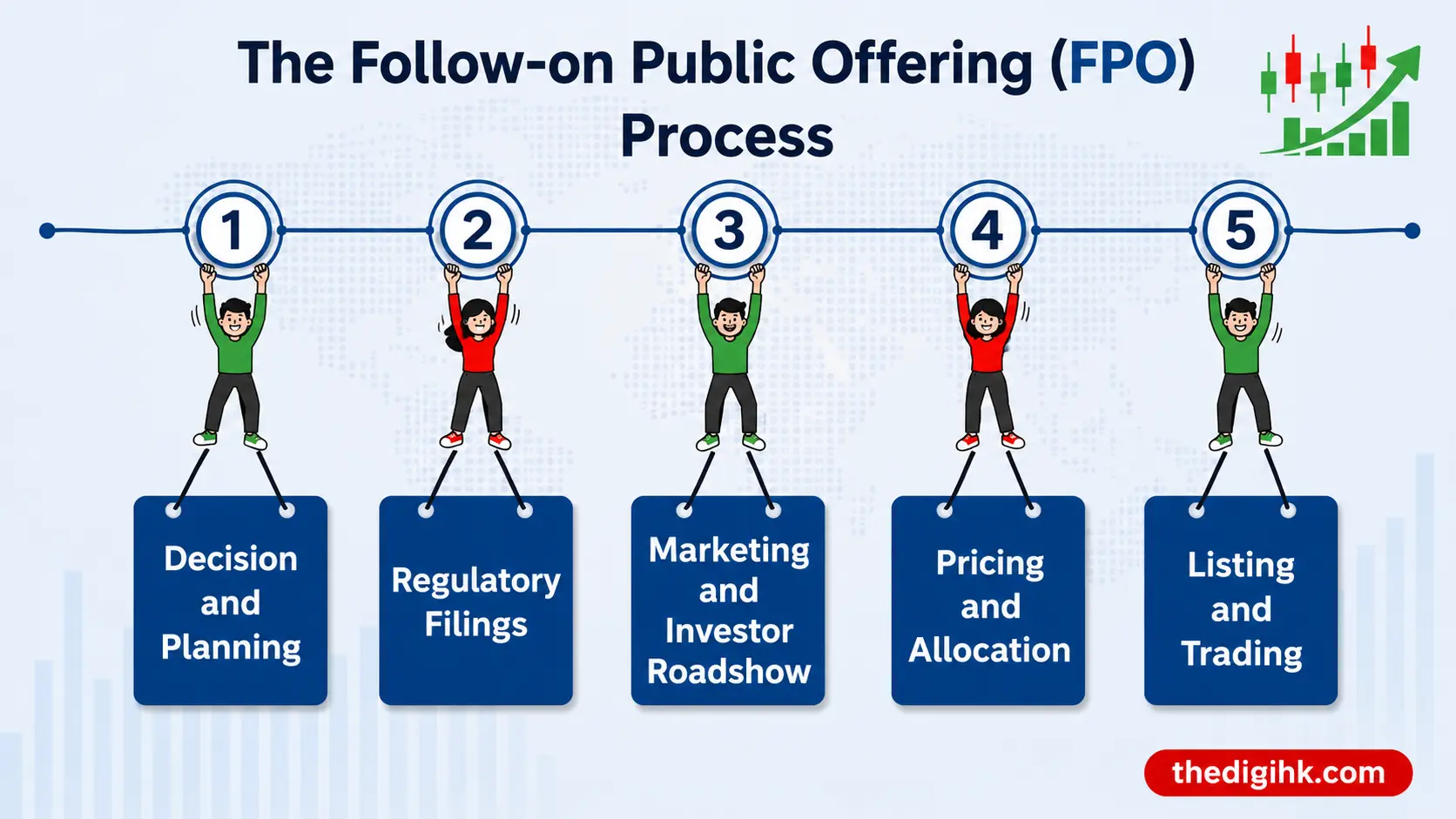
Many investors search for the best FPO to buy now because some companies offer shares at a discount compared to the current market price. However, investors should not rely only on the offer price. It is important to analyze the company’s earnings, debt levels, industry position, and future growth plans. Understanding how to buy FPO shares is simple, but selecting the right company requires research. A carefully chosen investment in FPO can support long-term portfolio growth and help investors participate in the future success of an established business.
Why Understanding the FPO Process is Important ?
3. What are the Follow-on Public Offer (FPO) Terms $ Conditions.
Before investing in an FPO, it is important to understand the terms and conditions mentioned in the offer document. These rules help investors know who can apply, how shares are allotted, the offer price, subscription period, and other important details. Every company launching an FPO publishes an offer document that contains information about the purpose of raising funds, financial performance, risks, and share allocation process. Reading these details can help investors make better decisions and avoid investing without proper research.
One of the most important terms in an FPO is the offer price. The company may issue shares at a fixed price or within a price band. Investors should compare this price with the current market price of the stock before applying. Another key condition is eligibility. Generally, investors must have a valid Demat account, trading account, and bank account to participate. Understanding these requirements is useful for anyone learning how to buy FPO shares for the first time.

For investors considering investment in FPO, it is also important to check the company's objectives for raising money. Some companies use the funds for expansion, while others may use them to reduce debt or improve operations. Investors searching for the best FPO to buy now should carefully review the offer document instead of relying only on market discussions or social media opinions. A clear understanding of the terms and conditions helps investors evaluate risks, compare opportunities, and make smarter long-term investment decisions.
Important FPO Terms Every Investor Should Know
4. How many Types of FPO?
A Follow-on Public Offer (FPO) is generally divided into two main types: Dilutive FPO and Non-Dilutive FPO. Understanding these types is important for investors because they can affect share ownership, company valuation, and future returns. When investors are planning an investment in FPO, knowing the difference between these two categories can help them make better decisions.
---Dilutive FPO---
In a Dilutive FPO, the company issues new shares to the public. As a result, the total number of outstanding shares increases. The money raised from selling these new shares goes directly to the company and is usually used for business expansion, debt reduction, research, or other growth initiatives. Since new shares are created, the ownership percentage of existing shareholders may decrease slightly.
---Non-Dilutive FPO---
In a Non-Dilutive FPO, existing shareholders such as promoters, founders, or large investors sell their existing shares to the public. In this case, no new shares are created, and the company itself does not receive the funds. Instead, the selling shareholders receive the proceeds from the sale. Investors searching for the best FPO to buy now should understand which type of FPO is being offered because it can provide insights into the company's objectives and future plans.
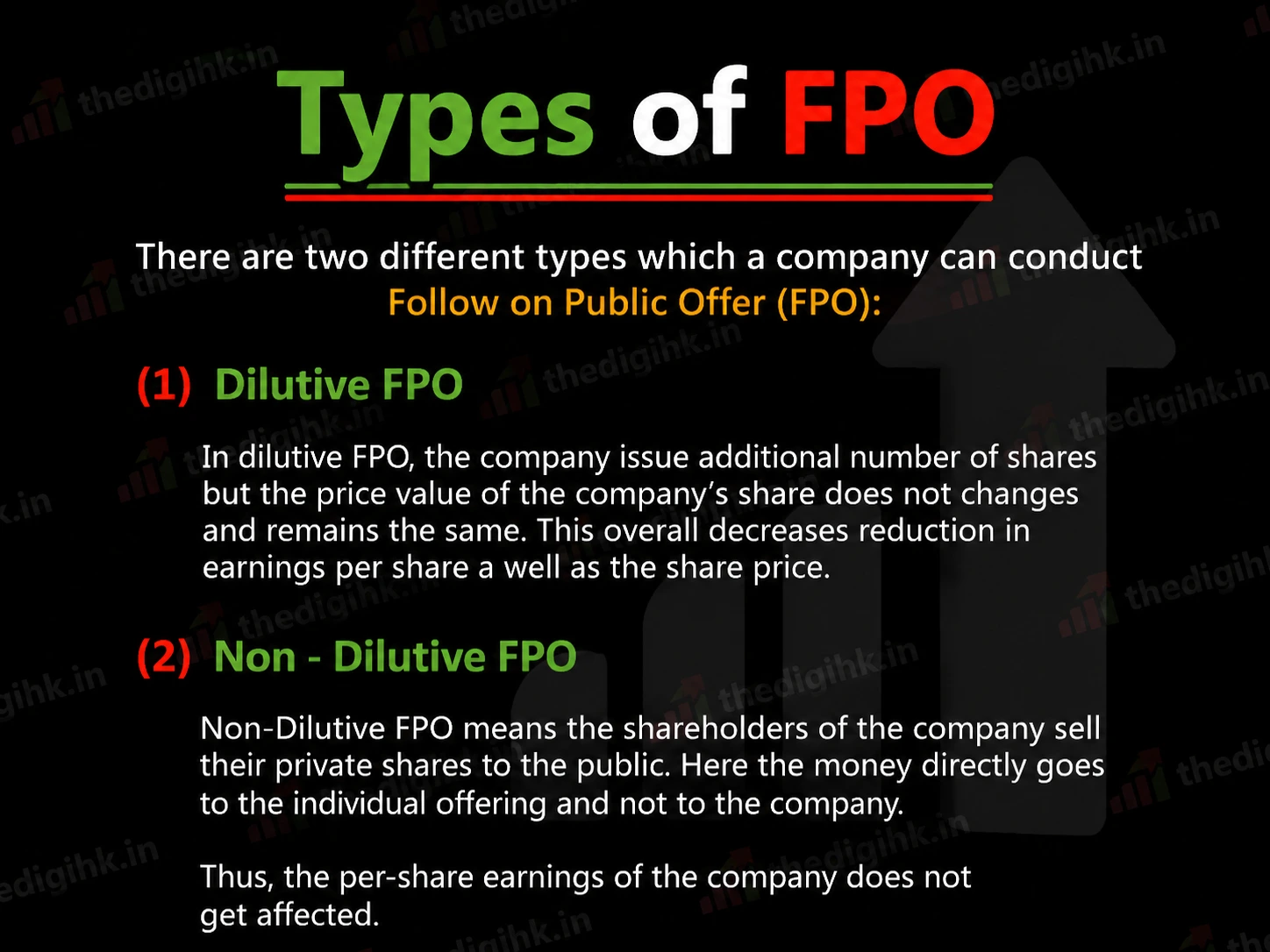
For beginners learning how to buy FPO shares, understanding these two types can improve investment decisions. While both types allow investors to purchase shares of a listed company, the purpose behind the offering can be very different. Before applying, investors should carefully read the offer document, evaluate the company's financial position, and understand how the raised funds will be used. This approach can help make an investment in FPO more informed and potentially more rewarding over the long term.
Key Points About FPO Types
5. How to Apply For a Follow-on Public Offer (FPO) Step-by-Step?
Applying for a Follow-on Public Offer (FPO) has become much easier thanks to online trading platforms and digital banking services. If you are interested in an investment in FPO, the first thing you need is a Demat account, a trading account, and a bank account linked to UPI. These accounts allow you to apply for FPO shares electronically without any paperwork. Before applying, investors should carefully read the company's offer document, understand why the company is raising funds, and review its financial performance. This research can help identify the best FPO to buy now based on business fundamentals rather than market speculation.
The process begins by logging into your stockbroker's platform or banking application. Navigate to the FPO section, select the available offer, and review the price details. Next, enter the number of shares or lots you wish to apply for and submit your application. After submission, you will receive a UPI mandate request to block the required amount in your bank account. Once you approve the mandate, your application is considered complete. After the subscription period ends, the company finalizes the allotment process. If shares are allotted, they are credited directly to your Demat account. If not, the blocked amount is released back to your account.
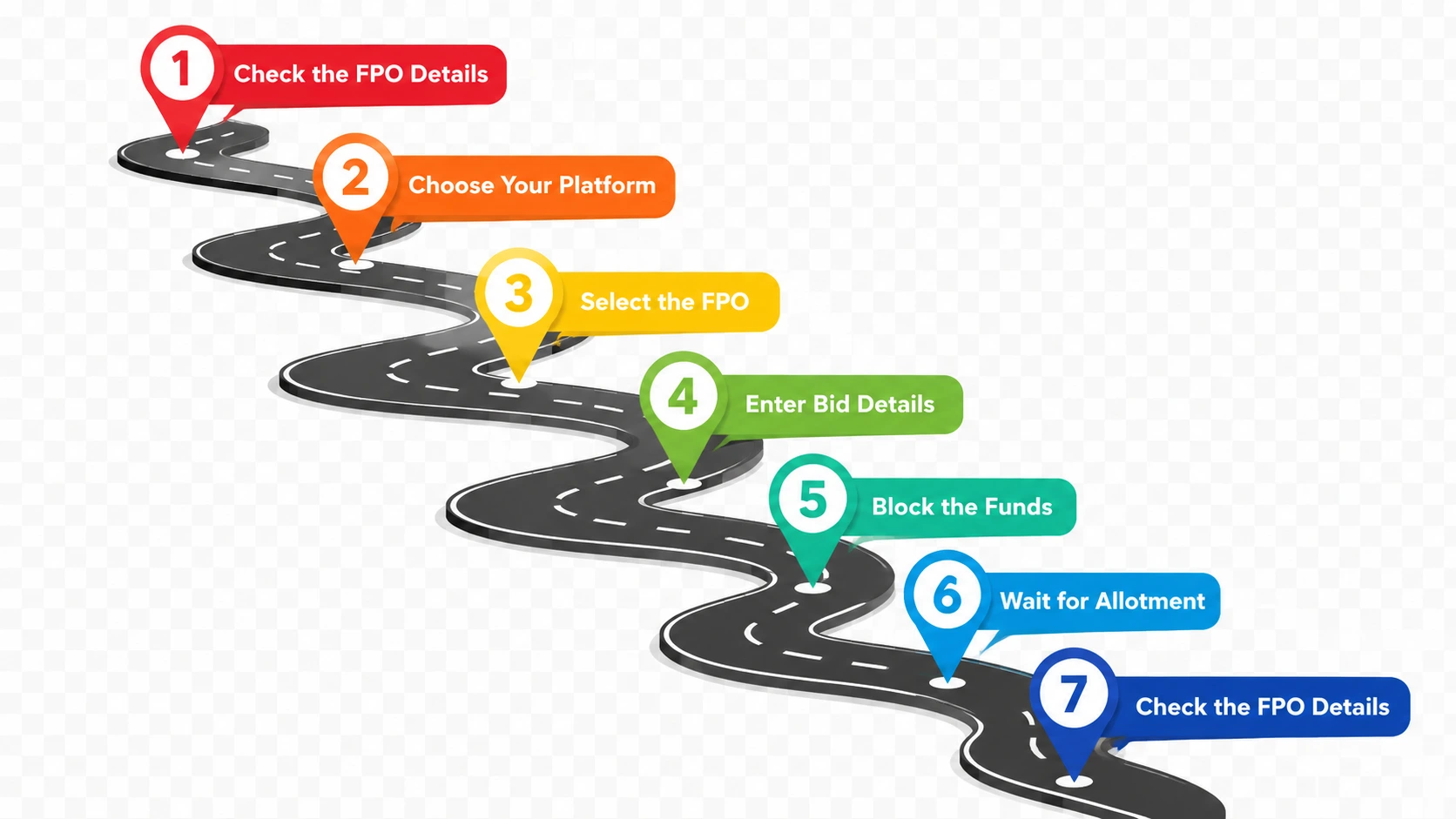
For investors learning how to buy FPO shares, the process is very similar to applying for an IPO. However, it is important to remember that successful investing depends on choosing the right company, not just completing the application process. A well-researched investment in FPO can offer long-term growth opportunities and strengthen your investment portfolio over time.
Step-by-Step FPO Application Process...
Why This Process Matters
6. FPO vs IPO
Many new investors get confused between an IPO and an FPO because both involve companies offering shares to the public. However, there are some important differences that every investor should understand before making an investment in FPO or an IPO. An Initial Public Offering (IPO) is the first time a private company offers its shares to the public and becomes listed on the stock exchange. In contrast, a Follow-on Public Offer (FPO) is launched by a company that is already listed and wants to raise additional funds from investors.
One of the biggest differences is the amount of information available to investors. In an IPO, investors have limited market history because the company is entering the stock market for the first time. With an FPO, investors can review the company's stock performance, quarterly results, financial statements, and management track record before investing. This additional transparency can help investors make more informed decisions.

The process of how to buy FPO shares is very similar to applying for an IPO. Investors can use their Demat account, trading account, and UPI-enabled bank account to apply online. While both investment options offer opportunities, the right choice depends on the company's fundamentals, valuation, and future growth potential. Whether choosing an IPO or an FPO, proper research remains the key to successful investing.
Key Differences Between IPO and FPO
Why Investors Should Know the Difference
7. What is Roal of FPO in Share Market?
A Follow-on Public Offer (FPO) plays an important role in the share market because it helps already listed companies raise additional capital from investors. After a company completes its IPO and becomes publicly traded, it may need more funds to expand its business, launch new products, reduce debt, invest in technology, or support future growth plans. Instead of depending entirely on bank loans, companies can use an FPO to raise money from the public. This process benefits both companies and investors, making FPO an important part of the stock market ecosystem.
For investors, an FPO creates another opportunity to invest in a company that already has a trading history and publicly available financial records. This makes investment in FPO easier to analyze compared to investing in a newly listed company. Investors can review the company’s revenue growth, profitability, debt position, and stock performance before making a decision. Many investors looking for the best FPO to buy now focus on companies with strong fundamentals and clear growth plans.

FPOs also improve liquidity in the market by increasing the number of shares available for trading. In some cases, they can help improve public shareholding and increase investor participation. Understanding how to buy FPO shares is useful because these offerings allow investors to participate in the growth of established businesses. A successful FPO can strengthen a company’s financial position, support future expansion, and create long-term value for shareholders. This is why FPOs are considered an important tool for both corporate growth and capital market development.
Importance of FPO in the Share Market
Why Investors Should Understand the Role of FPO
8. Why dose a Company need an FPO?
A company may need a Follow-on Public Offer (FPO) when it requires additional funds after already being listed on the stock exchange. As businesses grow, they often need capital to expand operations, launch new products, enter new markets, acquire other companies, improve infrastructure, or reduce existing debt. Instead of relying completely on bank loans, a company can raise money from public investors through an FPO. This helps the company access capital while avoiding the burden of high interest payments that usually come with borrowing.
One of the biggest reasons companies launch an FPO is to strengthen their financial position. For example, a company with high debt may use the funds raised through an FPO to repay loans and improve its balance sheet. A financially stronger company may be better positioned to grow in the future, which can benefit both the business and its shareholders. This is one reason why many investors interested in investment in FPO carefully review how the company plans to use the funds before applying.
For investors looking for the best FPO to buy now, understanding the purpose behind the FPO is very important. A company raising money for expansion and growth may offer better long-term opportunities than a company facing serious financial difficulties. Learning how to buy FPO shares is only one part of investing; understanding why the company is raising funds is equally important. By reviewing the company's objectives, financial reports, and future plans, investors can make more informed decisions and identify opportunities that align with their long-term investment goals.
Why Companies Launch an FPO
Why This Matters for Investors