
ETF (Exchange Traded Fund)
What Is an ETF?
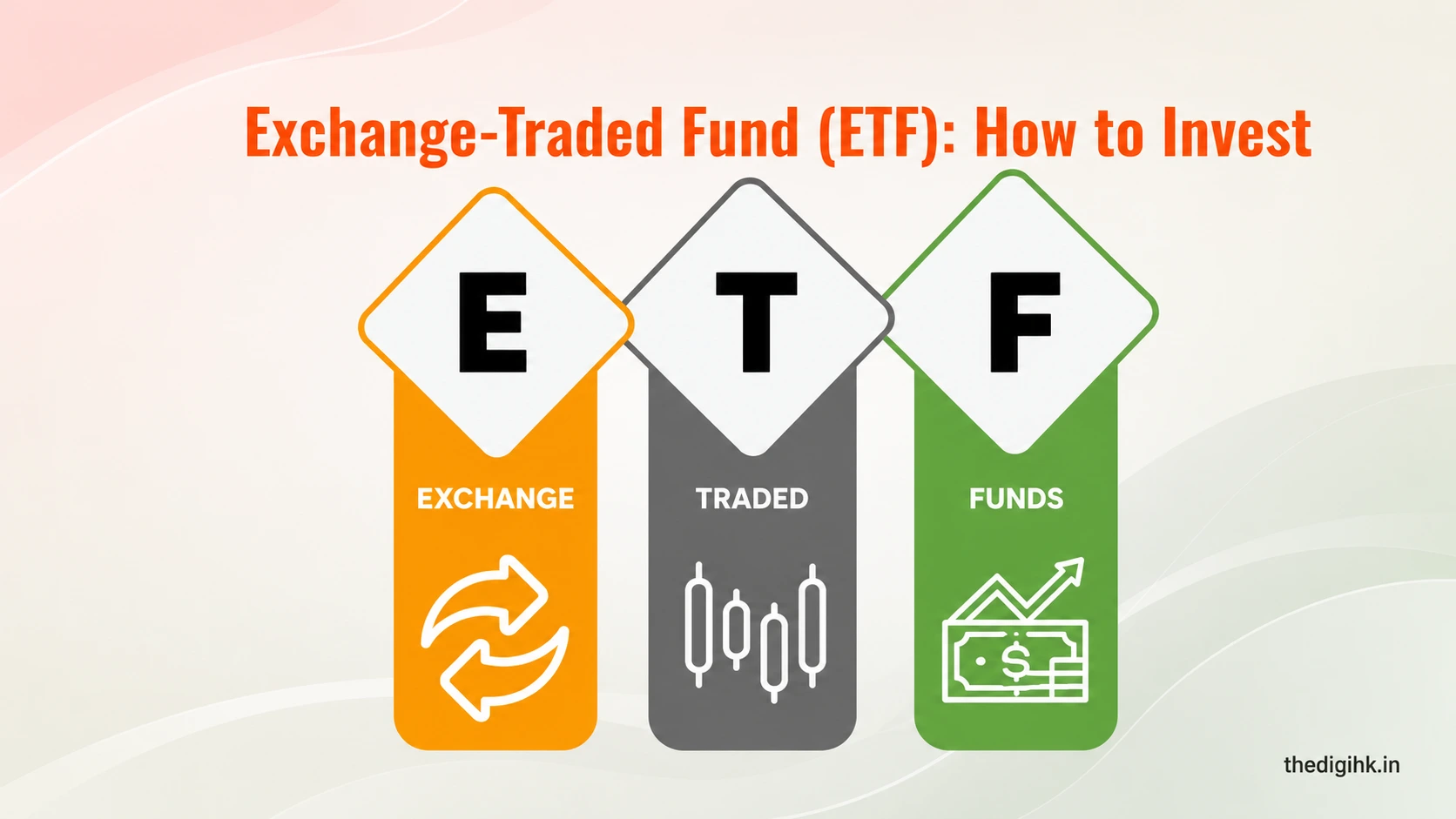
An ETF, also called an Exchange Traded Fund, is a type of investment fund that is traded on the stock exchange just like a regular share. An ETF holds a collection of assets such as stocks, bonds, gold, or index funds, and investors can buy or sell its units during market hours. In simple words, an ETF allows you to invest in many companies at once without buying their shares individually.
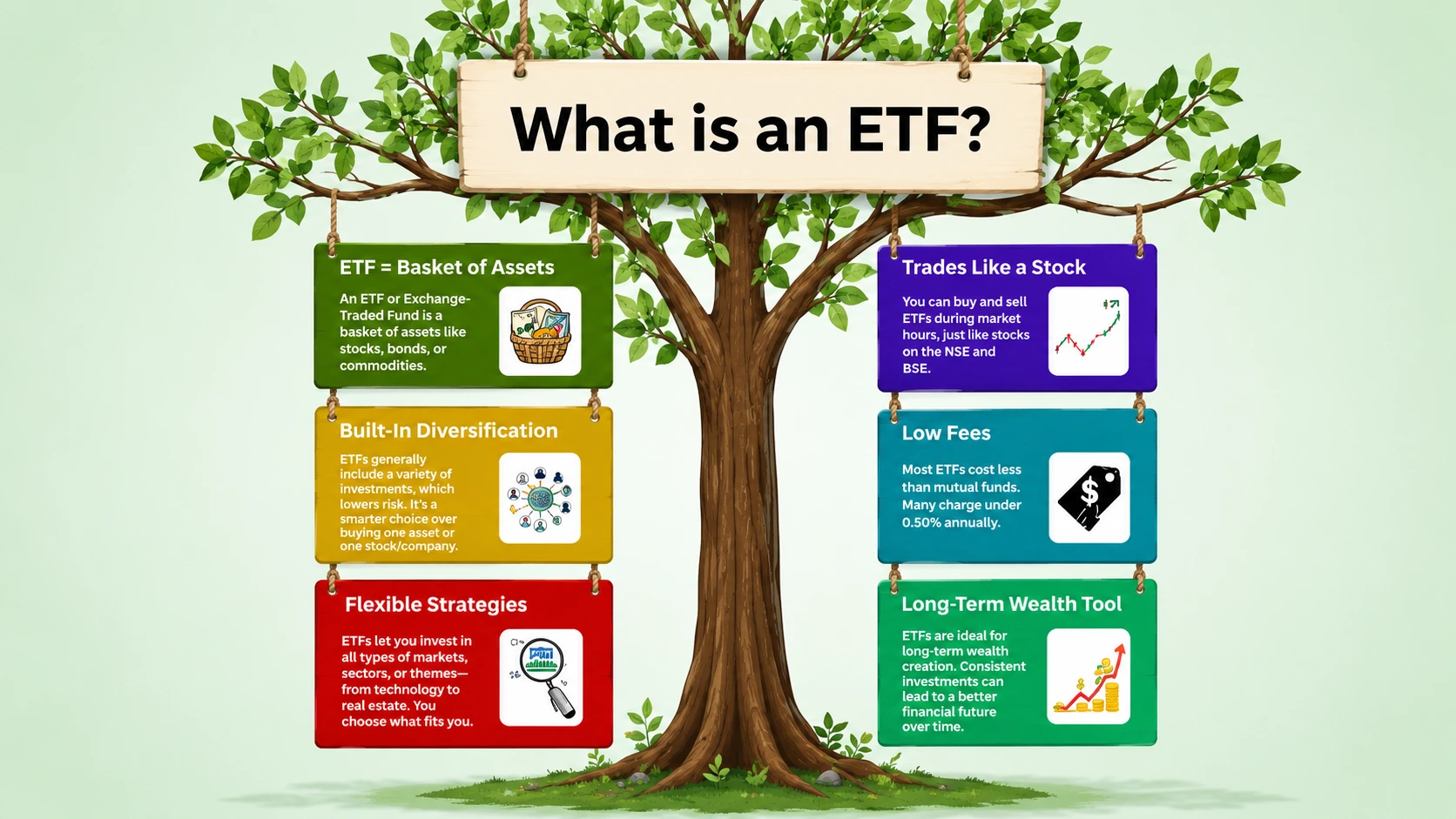
For example, a Nifty 50 ETF holds shares of all 50 companies in the Nifty 50 index. When you invest in that ETF, you automatically get exposure to all 50 companies. This makes ETF investing very popular among beginner and experienced investors in India. According to AMFI India, ETF assets under management have grown rapidly in recent years because more investors now understand the power of low-cost, diversified investing through ETFs.
Today, many investors search for the best ETF to invest in India because ETFs offer low cost, diversification, and flexibility. Unlike mutual funds, ETFs are traded on stock exchanges throughout the day, making them more flexible for active investors. However, choosing the right ETF requires understanding of its underlying assets, expense ratio, and tracking error. Smart investment in ETF should always be based on research, financial goals, and long-term planning rather than short-term market trends.
1. How Does an ETF Work?
Simple explanation of how ETFs are structured and traded on stock exchanges.
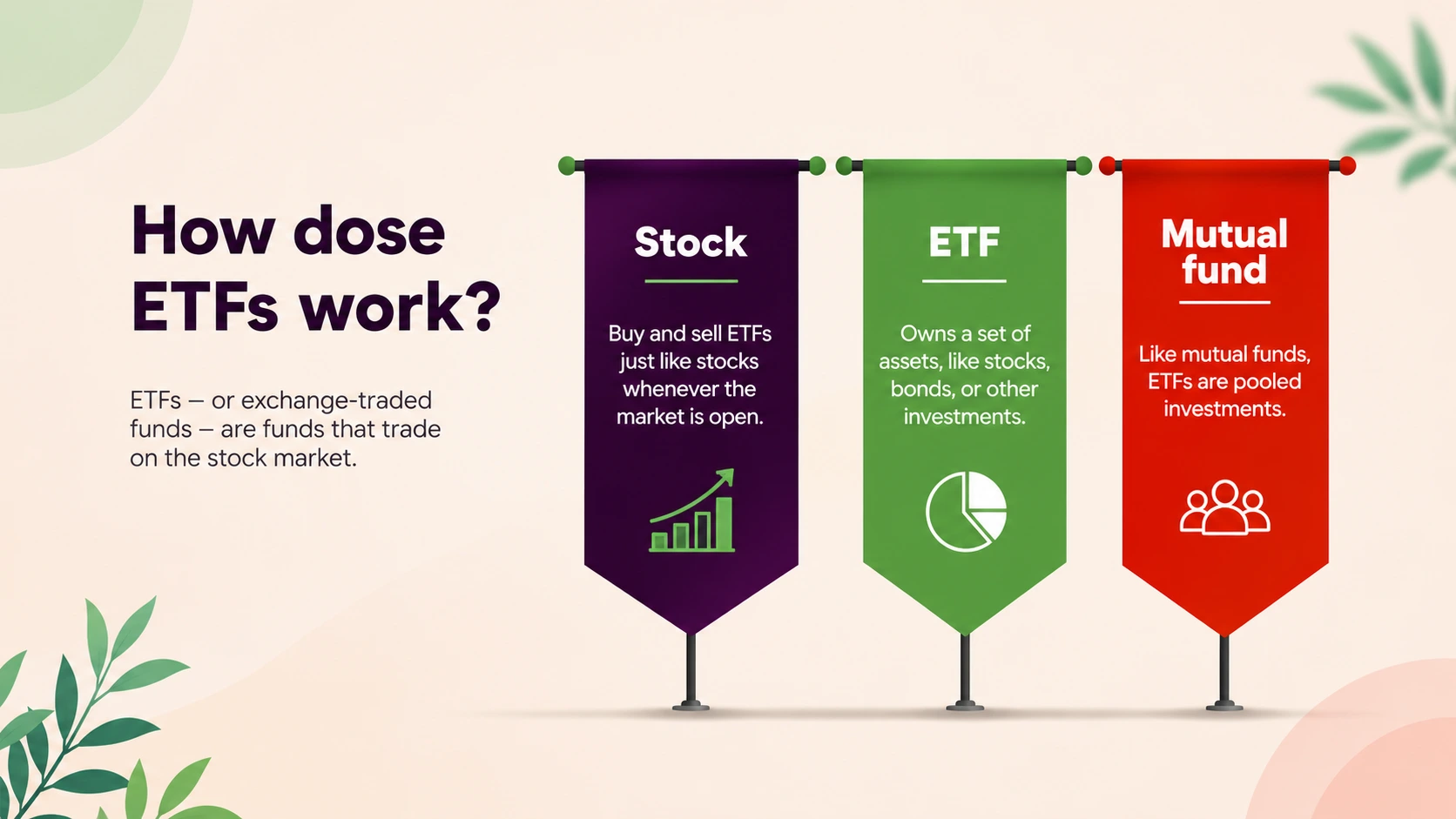
An ETF works by pooling money from many investors and using that money to buy a basket of assets that track a specific index, sector, or commodity. When you buy units of an ETF, you are buying a small portion of that entire basket. ETFs are listed on stock exchanges like NSE and BSE, and you can buy or sell them just like shares during trading hours. The price of an ETF unit changes throughout the day based on market demand and the value of its underlying assets.
For example, if you invest in a Sensex ETF, its value moves up and down based on the performance of the Sensex index. Unlike mutual funds, which are priced once at the end of the day, ETF prices update every second during market hours. This gives investors more control and transparency. Many beginners start their investment journey with ETFs because they are simple to understand, easy to buy, and do not require constant monitoring.
Important Points
- Etf Tracks An Index, Sector, Commodity, Or Basket Of Assets.
- Etf Units Are Traded On Nse And Bse Like Regular Shares.
- Price Of Etf Units Changes Throughout The Trading Day.
- You Need A Demat Account To Buy And Sell Etf Units.
- Etfs Provide Exposure To Many Assets Through A Single Investment.
- Low Expense Ratio Makes Etf More Cost-Effective Than Active Funds.
- Beginner Investors Find Etfs Simple And Transparent To Understand.
2. Why Should You Invest in an ETF?
Key reasons like diversification, low cost, and flexibility that make ETFs a smart choice.
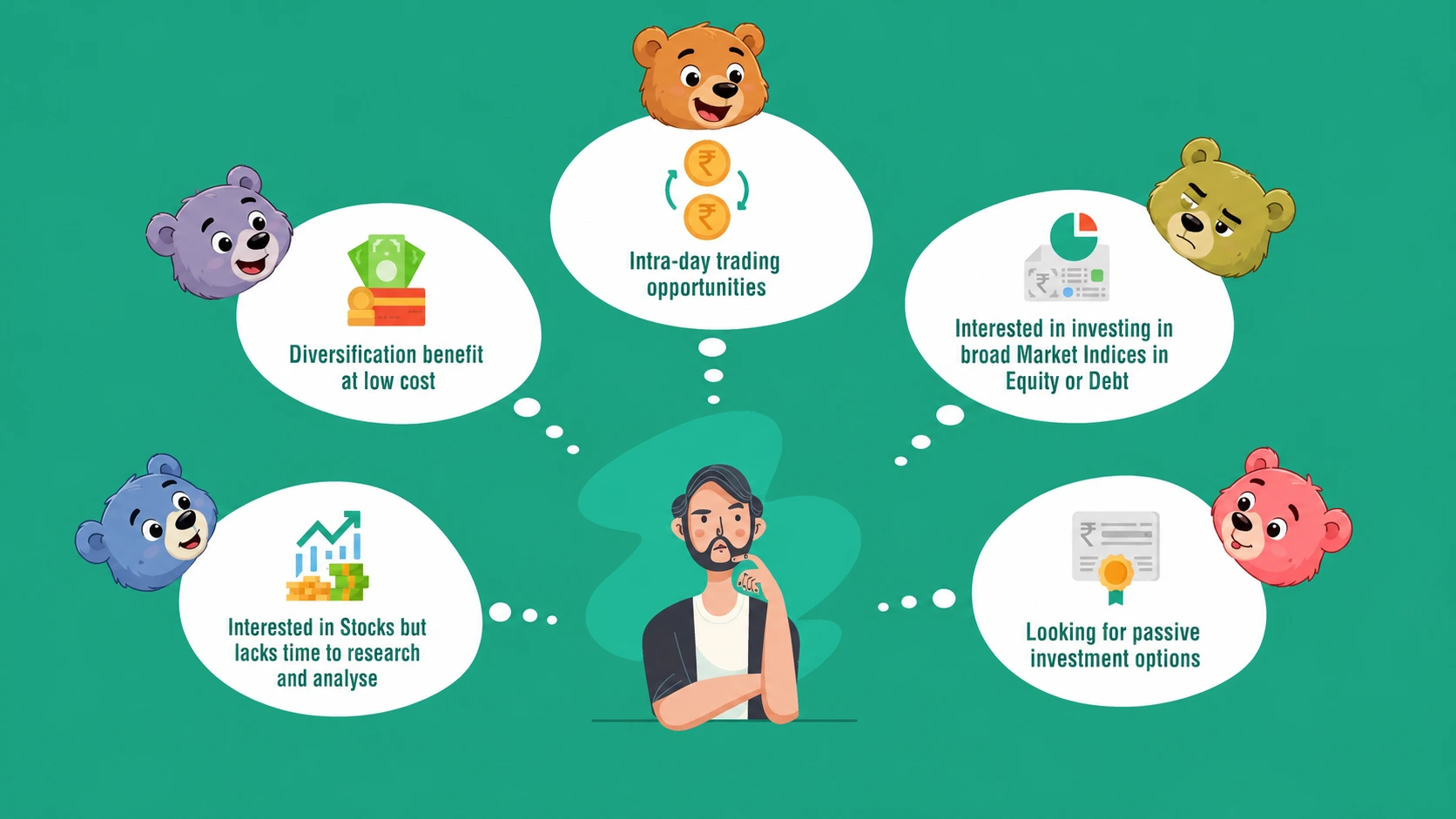
There are many strong reasons why investors choose ETFs over other investment options. The biggest advantage of ETF investing is diversification — with a single purchase, you get exposure to dozens or hundreds of stocks. This reduces the risk of losing money due to poor performance of any single company. For investors looking for the best ETF to invest in India, options like Nifty 50 ETF, Sensex ETF, and Gold ETF are very popular choices.
Another major reason to invest in ETF is the low cost. ETFs have very low expense ratios compared to actively managed mutual funds. This means more of your money stays invested and grows over time. ETFs are also very flexible — you can buy even one unit, making them accessible for investors with small capital.
Important Points
- Etfs Provide Instant Diversification Across Many Stocks Or Assets.
- Low Expense Ratio Means Lower Cost Than Most Mutual Funds.
- You Can Buy Etf Units With Very Small Amounts Of Money.
- Etfs Are Flexible And Can Be Bought Or Sold Anytime During Market Hours.
- Gold Etf And Index Etf Are Most Popular In India For Beginners.
- Etf Investing Reduces Risk Through Built-In Diversification.
- Long-Term Etf Investment Helps Build Wealth Steadily Over Time.
3. Types of ETFs You Should Know
Equity ETF, Gold ETF, Debt ETF, and Sectoral ETF explained in simple language.
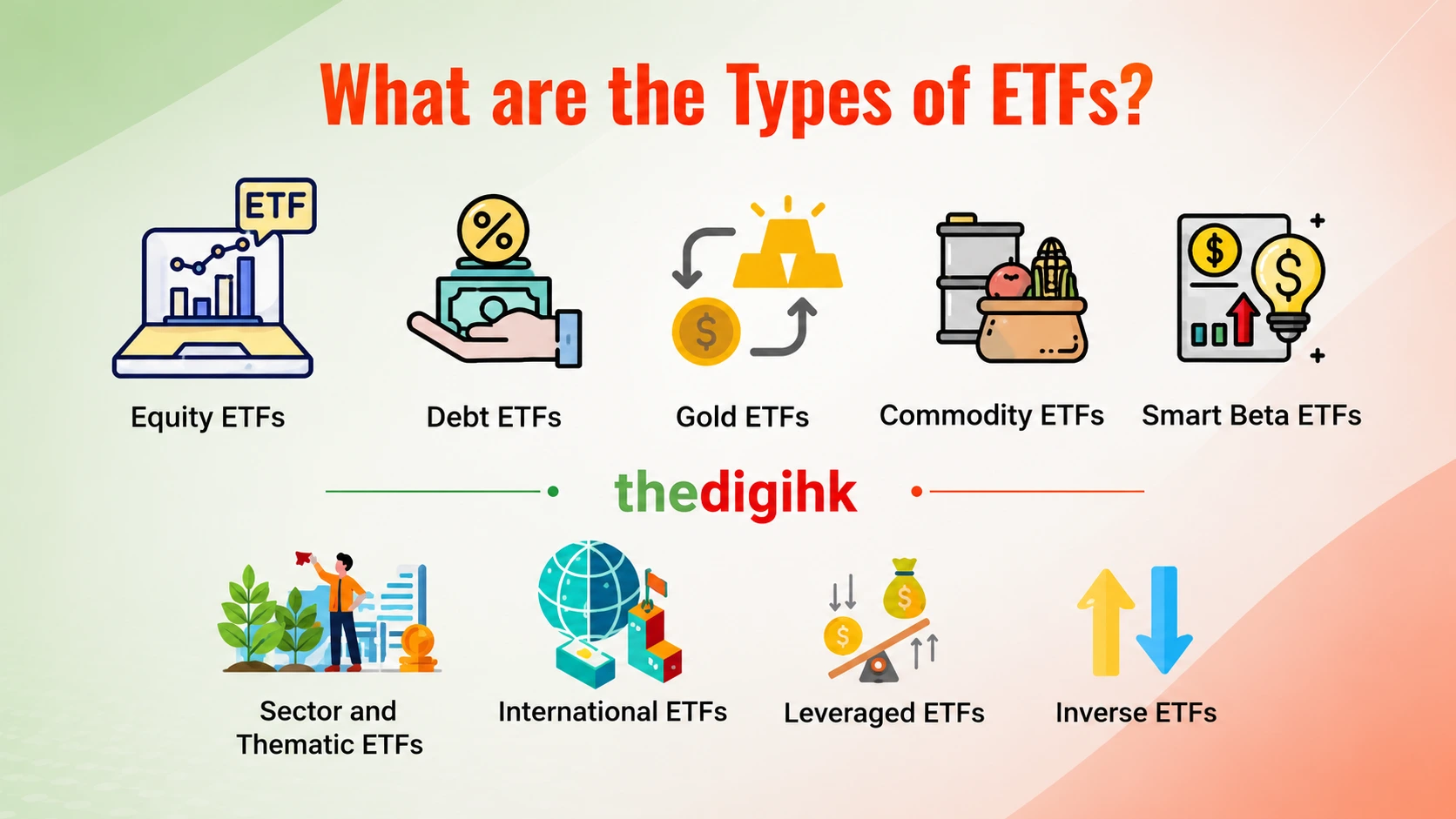
There are several types of ETFs available in India, and each one serves a different investment goal. The most popular type is the Equity ETF, which tracks a stock market index like Nifty 50 or Sensex. These ETFs are best for investors who want to grow wealth over the long term. The second popular type is the Gold ETF, which tracks the price of gold and is stored in digital form. Gold ETFs are a great alternative to buying physical gold.
Debt ETFs invest in government bonds and fixed income securities, making them suitable for conservative investors who want stable returns. Sectoral ETFs focus on specific industries like banking, IT, pharma, or infrastructure. International ETFs allow Indian investors to gain exposure to global markets like the US or China.
Important Points
- Equity Etf Tracks Stock Market Indexes Like Nifty 50 Or Sensex.
- Gold Etf Is A Safe And Convenient Way To Invest In Gold Digitally.
- Debt Etf Is Suitable For Low-Risk Investors Seeking Stable Returns.
- Sectoral Etf Focuses On Specific Industries Like Banking Or It.
- International Etf Gives Exposure To Global Stock Markets.
- Each Etf Type Suits A Different Investment Goal And Risk Level.
- Choosing The Right Etf Type Is Key To Successful Investment In Etf.
4. How Can You Invest in an ETF?
Step-by-step process for beginners to buy ETF units in India.
Investing in an ETF is very simple and can be done entirely online through a trading app or brokerage platform. To start ETF investing in India, you need a Demat account and a trading account with a registered broker like Zerodha, Groww, Angel One, or Upstox. Once your account is ready, open the trading app, search for the ETF you want to buy, and place a buy order just like you would for any stock.
You can choose to buy ETF units in lump sum or through a Systematic Investment Plan (SIP) mode if your broker supports it. After placing the order, ETF units are credited to your Demat account. Unlike IPOs, ETFs do not have a subscription window — you can buy them any time during market hours.
Important Points
- A Demat And Trading Account Is Required To Buy Etf Units.
- Etfs Can Be Bought On Nse And Bse During Market Hours.
- Use Apps Like Zerodha, Groww, Or Angel One To Buy Etfs Easily.
- Etf Units Are Credited To Your Demat Account After Purchase.
- Sip Mode Is Available For Etf Investing On Some Platforms.
- Choose Etfs With High Trading Volume For Better Liquidity.
- Always Check Expense Ratio And Tracking Error Before Investing.
5. Benefits of Investing in ETFs
Diversification, low cost, transparency, and tax efficiency explained for investors.
ETFs offer several important benefits that make them one of the most popular investment options for both beginners and experienced investors in India. The biggest benefit is diversification — by investing in a single ETF, you get exposure to many companies or assets at once. This automatically reduces concentration risk.
ETFs are also much cheaper than actively managed mutual funds because fund managers do not need to make active decisions — they simply follow the index. Tax efficiency is another benefit — ETFs are taxed like stocks, and long-term capital gains of up to Rs. 1 lakh per year are tax-free.
Important Points
- Etfs Provide Instant Diversification With A Single Investment.
- Low Expense Ratio Makes Etfs More Cost-Effective Than Mutual Funds.
- Etf Holdings Are Publicly Disclosed Daily For Full Transparency.
- Long-Term Capital Gains Up To Rs. 1 Lakh Are Tax-Free.
- Etfs Can Be Bought And Sold Any Time During Market Hours.
- Even Beginners Can Start Etf Investing With Very Small Amounts.
- Etfs Track Well-Known Indexes, Reducing Guesswork For Investors.
6. Risks of ETF Investment
Market risk, tracking error, and liquidity risk that investors should understand carefully.
Although ETFs are generally considered safer than individual stocks, they still carry certain risks that every investor must understand. The most common risk is market risk — if the overall market falls, the ETF's value will also fall because it tracks the market. Investors who panic and sell during market falls can lock in losses.
Another important risk is tracking error, which is the difference between the ETF's actual performance and the index it tracks. A high tracking error means the ETF is not following the index accurately, which can reduce returns. Liquidity risk is also relevant for some ETFs — less popular ETFs may have low trading volume, making it difficult to buy or sell units at the desired price.
Important Points
- Etfs Carry Market Risk — Values Fall When The Overall Market Falls.
- Tracking Error Can Cause Etf Returns To Differ From The Index.
- Low-Volume Etfs Can Have Liquidity Issues During Market Stress.
- Selling In Panic During Market Falls Can Lock In Permanent Losses.
- Always Check Tracking Error Before Selecting An Etf To Invest In.
- Sectoral Etfs Carry Higher Risk Than Broad Index Etfs.
- Long-Term Investing Reduces Risk And Improves Etf Investment Returns.
7. Important Things to Check Before Buying an ETF
Expense ratio, tracking error, AUM, and liquidity — key factors to evaluate.
Before investing in any ETF, investors should carefully evaluate several important factors. The first thing to check is the expense ratio, which is the annual fee charged by the fund house to manage the ETF. A lower expense ratio is better because it means more of your money stays invested. For example, a good index ETF should have an expense ratio below 0.10% to 0.20%.
The second important factor is the tracking error — a lower tracking error indicates that the ETF is accurately replicating its index. Third, check the AUM (Assets Under Management) — a higher AUM generally means more investor confidence and better liquidity. Trading volume is equally important — ETFs with high daily trading volume are easier to buy and sell at fair prices.
Important Points
- Always Check Expense Ratio — Lower Is Better For Long-Term Returns.
- Tracking Error Should Be As Low As Possible For Accurate Index Replication.
- High Aum Etfs Are Generally Safer And More Trustworthy.
- Check Daily Trading Volume Before Buying For Better Liquidity.
- Understand What Assets Or Index The Etf Tracks Before Investing.
- Compare Multiple Etfs Of The Same Category Before Making A Choice.
- Align Your Etf Choice With Your Financial Goals And Risk Appetite.
8. ETF vs Mutual Fund: What is the Difference?
How ETFs and mutual funds are different — cost, flexibility, trading, and management style.
ETFs and mutual funds are both popular investment options in India, but they are quite different in structure and working. A mutual fund is managed by a professional fund manager who actively picks stocks to beat the market. An ETF, on the other hand, simply tracks an index or basket of assets passively without active decision-making. Because ETFs do not need active management, their cost is much lower than mutual funds.
Another key difference is how they are traded. Mutual funds are bought and sold at the end-of-day NAV price, while ETFs are traded on stock exchanges throughout the day just like stocks. This makes ETFs more flexible for investors who want real-time pricing. Both products have their place in a balanced portfolio — ETFs are better for low-cost passive investing, while mutual funds suit investors who prefer professional active management.

Important Points
- Etfs Are Passively Managed — They Track An Index Without Active Decisions.
- Mutual Funds Are Actively Managed By A Professional Fund Manager.
- Etfs Have Lower Expense Ratios Than Most Mutual Funds.
- Etfs Can Be Traded Anytime During Market Hours Like Stocks.
- Mutual Funds Are Bought And Sold At End-Of-Day Nav Price.
- Both Etfs And Mutual Funds Are Regulated By Sebi In India.
- Combining Etfs And Mutual Funds Can Build A Well-Balanced Portfolio.
Never Stop Learning About Investing!
Stay up to date with the latest courses, educator articles, quizzes, and market insights from thedigihk.in — your trusted stock market education partner.